


Our own car and our own edit, not a customer's claim.
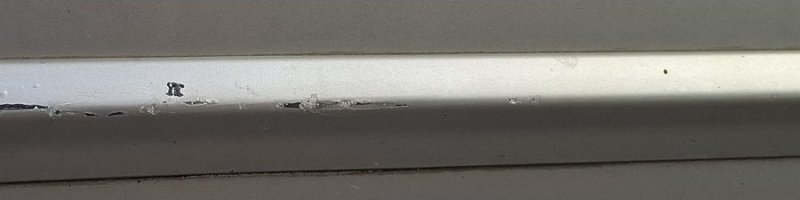
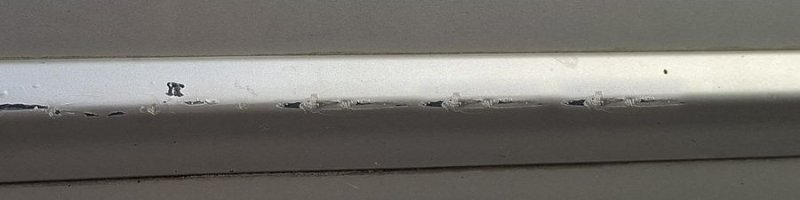


What changed
- The damage. Copied along the trim until it ran roughly three times as long.
- What saved the file. The original's compression settings match the phone's camera. The copy's belong to editing software.
- The phone's own records. Present after the original image, gone from the copy.
What the report said: Authenticity A for the original, B for the copy.

That is enough to send a photo described as "straight from my phone" to an assessor. The report didn't outline the copied damage: its check for repeated areas found the same number of matches in both files, because door trim is full of repeating texture. More photos of the same damage, from other angles, are what expose a pasted scratch.
Updated 14 November 2026
Our first edited copy was lost, so we made the same edit again from the original photo and ran both files. The grades are the same: A, then B. Reports now include evidence maps.
-
-
-
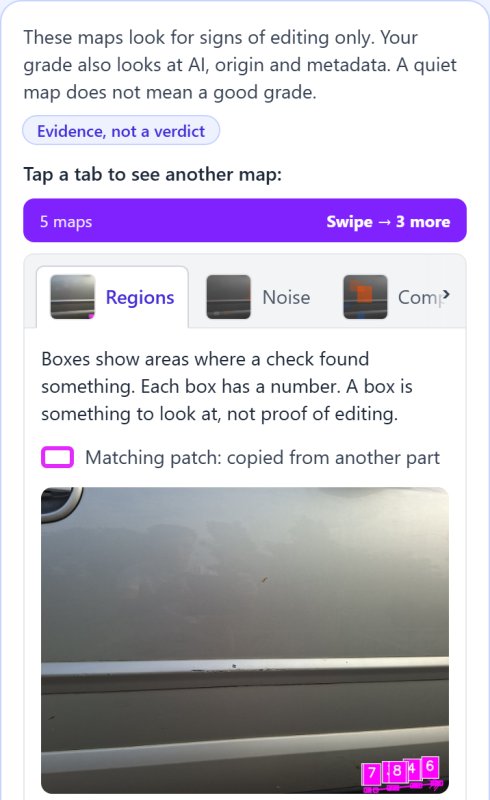
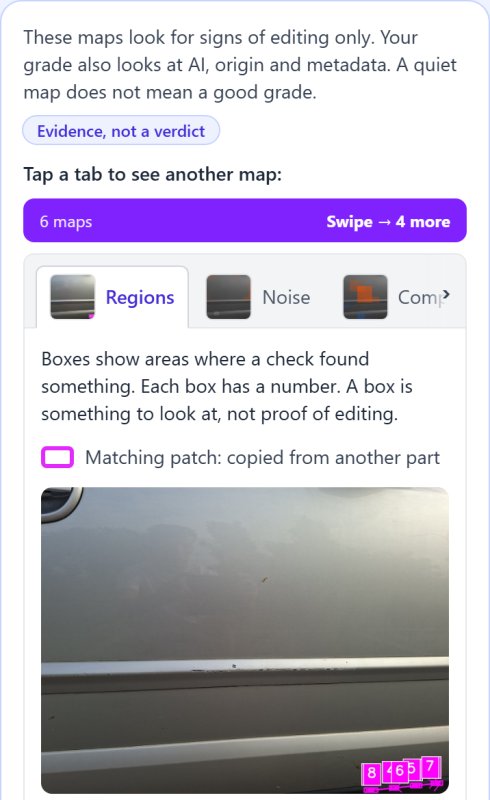
Regions boxes areas that match another part of the photo. On both files they sit on the sill, where the texture repeats. None is on the scratch we copied.
-
Save history appears only on the copy, because it was saved twice. It measures the middle of the photo. Colour runs along the trim, over part of where we pasted the scratch, and over trim we didn't touch.


The maps don't outline the copied damage. They do show the file was saved again, which a photo "straight from my phone" shouldn't have been.
Go deeper
- How a claims team can use this: How to check insurance claim photos for fraud
- Why it works: How to tell if a photo has been edited, by Kenneth Springer
- Try it on your own photo


